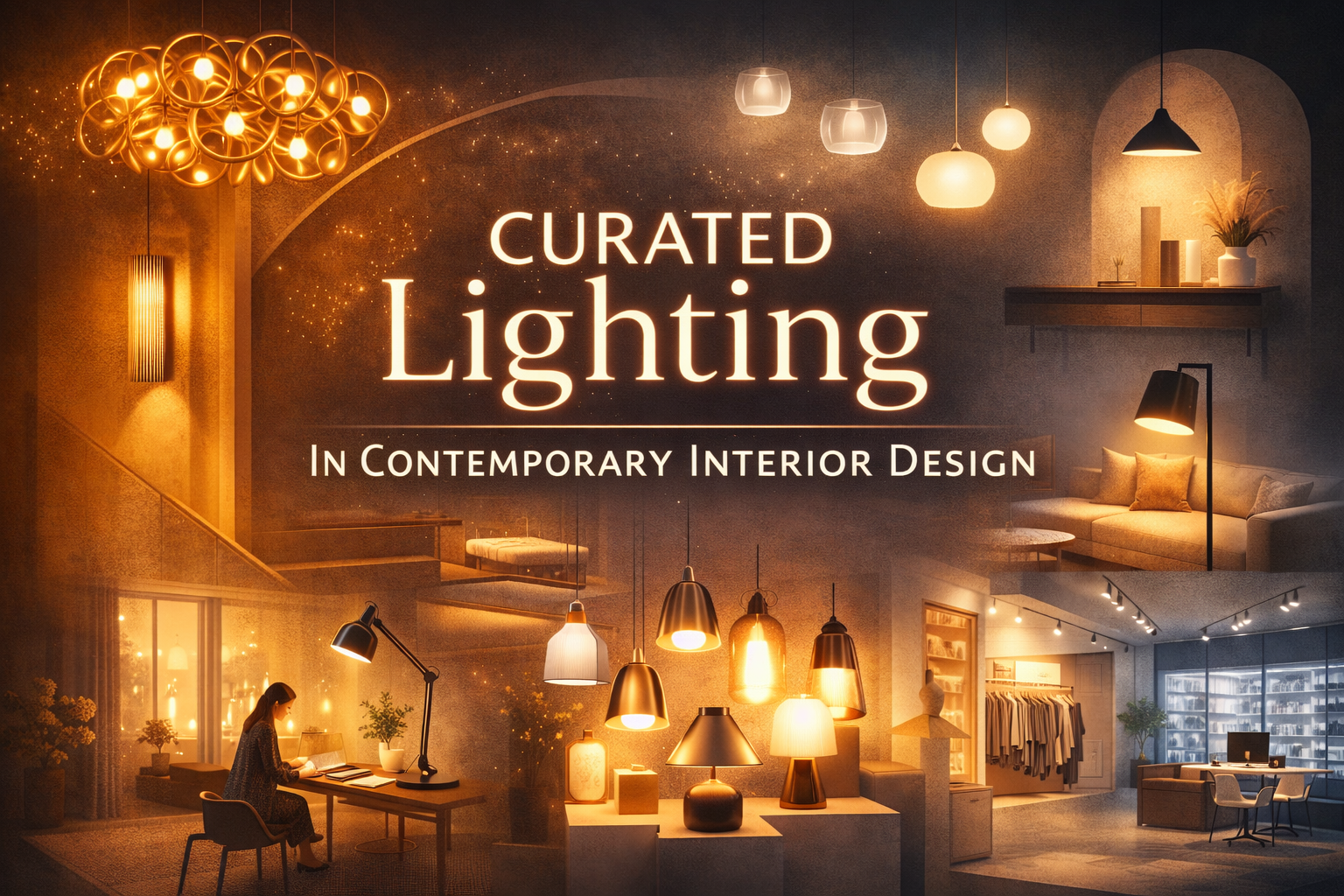
In contemporary interior design, lighting is no longer selected purely for function. Designers increasingly treat lighting as an architectural element that supports concept, mood, and spatial identity. This shift has brought greater focus to curated lighting, where fixtures are chosen deliberately rather than in excess.
Standard shop Toronto interiors increasingly reflect this approach, where lighting is curated rather than accumulated. Curation in lighting design is rooted in restraint. A curated lighting approach limits choices to a refined selection that shares a consistent design language. This reduces visual noise and helps spaces feel unified rather than fragmented, particularly in modern retail and commercial environments.
What Curated Lighting Means in Modern Interiors
Curation in lighting design is rooted in restraint. A curated lighting approach limits choices to a refined selection that shares a consistent design language. This makes spaces feel unified rather than fragmented.
By reducing visual noise, curated lighting simplifies decision-making while ensuring that lighting aligns with architectural intent. Whether applied in residential or commercial environments, curated selections help maintain consistency across different rooms and zones.
How Curated Lighting Supports Design Intent
One of the primary advantages of curated lighting is clarity of purpose. Carefully selected fixtures support materials, furniture, and spatial proportions instead of competing with them.
For example, a sculptural pendant placed above a dining table can serve as a visual anchor, while understated wall or ceiling fixtures provide supporting illumination without distraction. Each light has a defined role within the overall composition.
Performance and Long-Term Usability in Lighting Design
Curated lighting reflects an understanding that appearance alone is not enough. Designers evaluate how fixtures perform over time, considering factors such as glare control, light distribution, maintenance needs, and durability.
Lighting chosen through a curatorial process tends to remain effective and visually relevant for longer periods. This reduces the need for frequent replacements and supports long-term comfort and usability.
Curated Lighting in Commercial and Workplace Environments
In commercial spaces, shop lighting plays a direct role in shaping user experience and brand perception. Hospitality environments often rely on warm, layered lighting to create comfort and intimacy. Retail spaces use controlled illumination to guide attention and highlight products.
Office environments require adaptable lighting that supports both focus and collaboration. A curated lighting strategy ensures that lighting reinforces these functional goals rather than working against them.
The Role of Materiality in Curated Lighting Design
Material selection is central to curated lighting. Metals, glass, ceramics, and composite materials interact with light in distinct ways. These interactions influence brightness, reflection, softness, and visual depth.
Designers use material qualities to shape atmosphere and balance light output. In this way, lighting fixtures become part of the overall material palette, not isolated objects.
Consistency and Quality Control Through Curation
Curated lighting collections make it easier to maintain consistent standards across a project. When fixtures come from a refined selection, performance, finishes, and installation requirements are more predictable.
This consistency is particularly important in large-scale projects where coordination, reliability, and uniform performance are critical.
Intention Over Excess in Lighting Design
Curated lighting represents a design philosophy that values intention over abundance. It encourages thoughtful consideration of how light interacts with space, materials, and people.
By avoiding unnecessary complexity and focusing on purposeful choices, curated lighting supports interiors that feel cohesive, functional, and lasting rather than trend-driven or visually cluttered.